


Blog
The Monk Never Brewed It — The Untold Truth About Franziskaner Weissbier

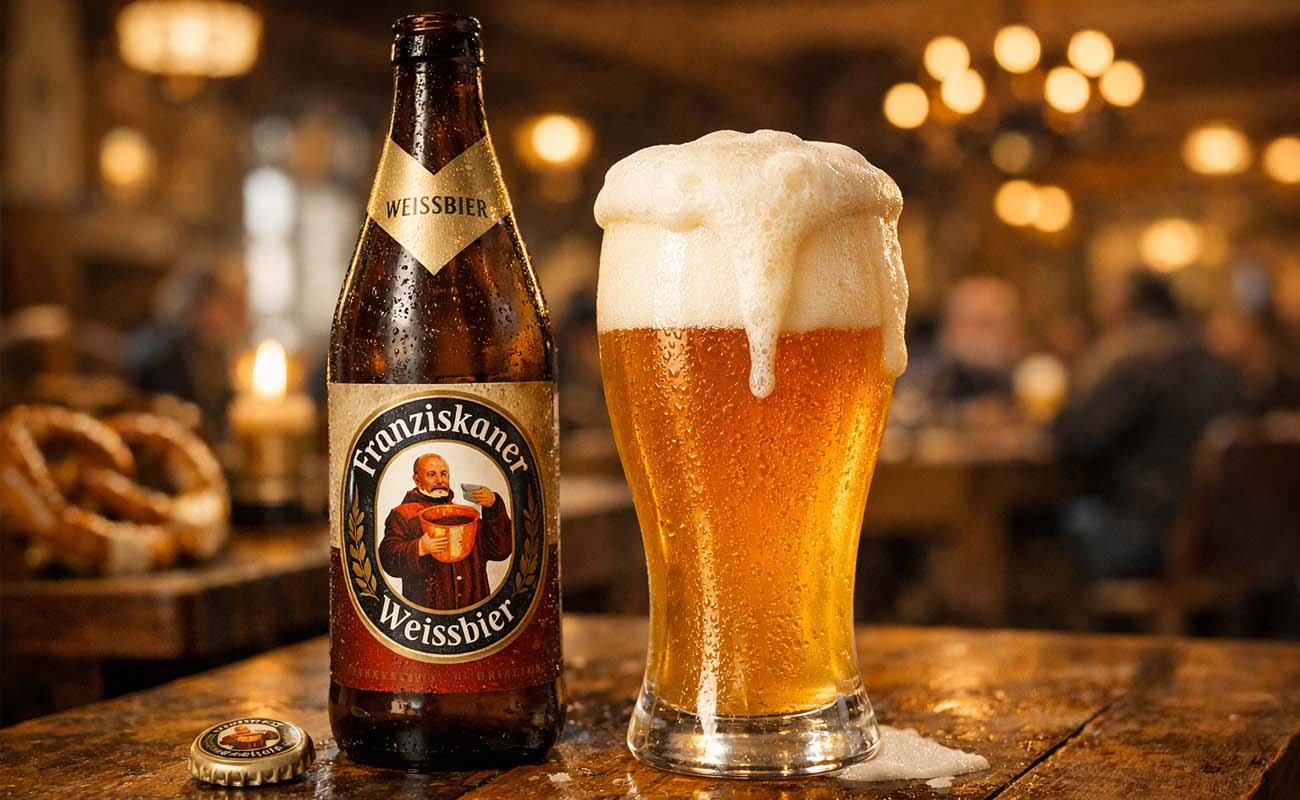
Pick up a bottle of Franziskaner Weissbier and the first thing you see is a smiling monk raising a frothing stein. It is one of the most recognisable images in the entire beer world — warm, timeless, and unmistakably Bavarian. There is just one problem: no Franciscan monk ever actually brewed this beer. It was a commercial secular brewery that simply operated next door to a Franciscan monastery and borrowed the name by association. Over centuries, that proximity quietly became legend, and the brewery leaned fully into the monastic identity. Clever branding — and one of the most interesting untold stories in beer history.
That myth aside, there is nothing fake about what is inside the bottle. Franziskaner Weissbier is one of the finest wheat beers in the world, brewed in Munich since 1363 and still tasting the way it was always meant to taste. This guide covers the real history, the science behind the flavour, how to pour it correctly, what to eat with it, and an honest comparison with every major rival.
The Real History: More Interesting Than the Label
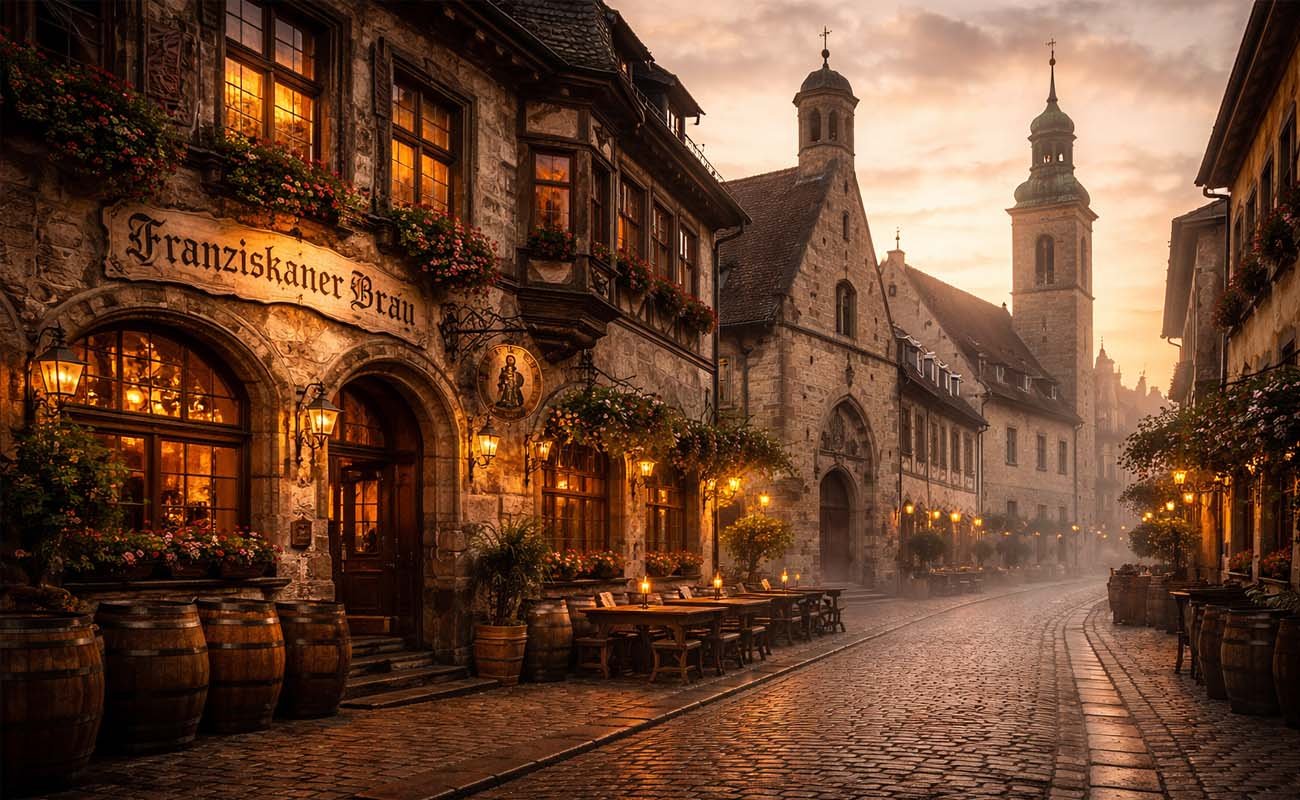
The brewery’s original name was “Braustätt bey den Franziskanern” — which translates to “the brewery by the Franciscans.” The monastery was next door. The brewery was never part of it. That detail matters because most of the romantic history surrounding Franziskaner — the monks, the ancient recipes, the spiritual brewing lineage — is built on that geographical accident rather than any real monastic connection.
For much of Bavarian history, wheat beer was completely controlled by the state. From the 16th to the 18th century, the ruling Wittelsbach dukes held a monopoly on Weissbier production, treating it as a royal luxury and a reliable source of income. This forced Franziskaner and many other private breweries to focus on darker barley beers for generations, even as demand for wheat beer kept growing steadily. When that monopoly was finally abolished in the early 19th century, the breweries that moved quickly to revive wheat beer traditions gained enormously — and Franziskaner was amongst the biggest winners.
The single most important decision in the brewery’s modern history came in 1964. At a time when pale lagers completely dominated the market, Franziskaner chose to focus almost entirely on Weissbier. This went directly against the industry trend of that era. It worked. The naturally cloudy Hefe-Weissbier became the flagship, celebrated worldwide for its banana-and-clove yeast profile and creamy texture. The brewery committed fully to tradition, bottle conditioning, and Bavarian brewing identity — and the market rewarded that confidence over the following decades.
In 1922, Franziskaner had already merged with Spaten Brewery, eventually forming Spaten-Franziskaner-Bräu. By the 2002 to 2003 brewing year, Franziskaner alone was producing one million hectolitres annually — a remarkable volume for a wheat beer brand. Today the brewery is part of Anheuser-Busch InBev, a fact that still provokes debate amongst traditional beer enthusiasts. However, the brewing process, yeast strain, ingredients, and commitment to the German Purity Law have remained unchanged through every ownership change.
What Franziskaner Weissbier Actually Is
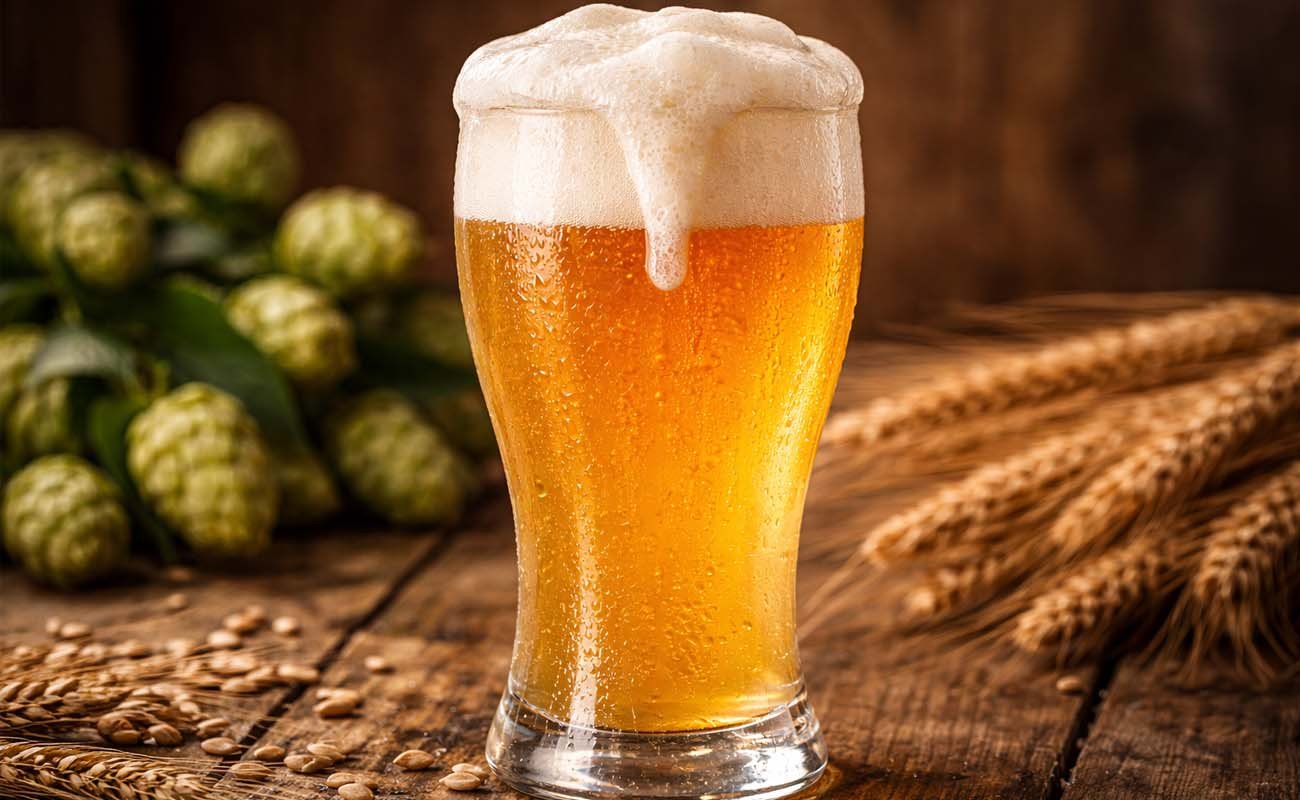
Franziskaner Weissbier is a German Hefeweizen — a wheat beer brewed using a top-fermenting yeast at warmer temperatures. “Hefe” means yeast and “Weissbier” means wheat beer. The essential numbers are straightforward: 5.0% ABV, 12 IBU bitterness rating which is extremely low, 153 calories per 12-ounce serving, and 11.6 grams of carbohydrates. By German law, it must be brewed with at least 50% wheat malt, and that high wheat proportion is central to its distinctive cloudy appearance and soft texture.
The brewery sources its ingredients with great care. Water comes from the brewery’s own well beneath the Munich facility. Grain arrives from farmers in the Donau-Ries region of Bavaria. Hops come from the Hallertau region, historically one of the world’s most respected hop-growing areas. The yeast is bred entirely in-house and has been the defining element of the beer’s character for generations.
Here is the fact that surprises most people the first time they hear it: Franziskaner does not contain any actual banana. The strong banana aroma and flavour that define the beer are created entirely during the fermentation process by the yeast reacting chemically with the wheat malt. The specific compound responsible is called isoamyl acetate. Equally, no clove is ever added to the recipe. Both of the beer’s signature flavours — banana and clove — are pure products of fermentation chemistry. That is why they taste so naturally integrated rather than artificially added on top.
What You Will Actually Taste
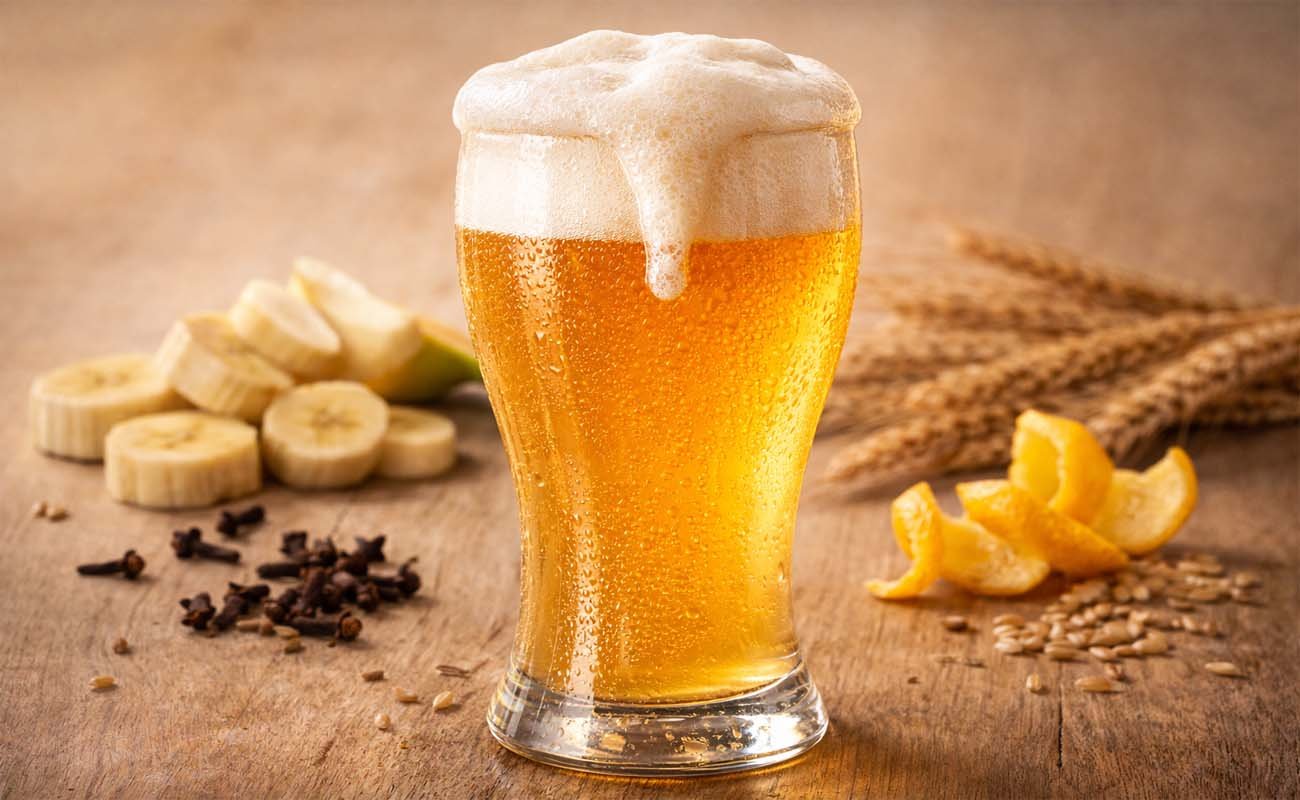
The first thing most people notice about Franziskaner is the cloudiness. The hazy copper-gold colour comes from suspended yeast and wheat proteins that are deliberately left in the beer rather than filtered out. This is a defining feature of authentic Hefeweizen, not a flaw. Those unfiltered elements carry a significant portion of the beer’s complexity and aroma.
On the nose, ripe banana leads immediately. Beneath it sits orange zest, a hint of lemon, and faint suggestions of peach and apricot that most drinkers only consciously register after a few sips. The clove note is present but quiet — detectable in the background without being sharp or aggressive. Holding everything together is a base of fresh bread dough, the yeast and wheat backbone that gives the fruit something solid to rest against.
The palate delivers an interesting shift that most reviews miss. Banana dominates at first contact, but as the beer settles on the tongue, clove and cinnamon become noticeably more present. The mouthfeel is smooth and genuinely creamy in a way that most beers never achieve. There is no alcohol burn at 5% ABV, no harsh bitterness from the minimal hop presence, and no unpleasant aftertaste. The finish is clean, mildly sweet, and invites the next sip immediately.
Something almost no other guide mentions: this beer changes significantly with temperature. Served straight from the fridge, it is crisp and refreshing. Allowed to warm slightly to around 10 degrees Celsius, the banana notes deepen, the spice complexity opens up, and a richness emerges that simply does not exist when the beer is ice cold. The brewery recommends serving between 9 and 12 degrees Celsius. That range is deliberate — it is where the flavour performs at its peak.
How to Pour Franziskaner Correctly
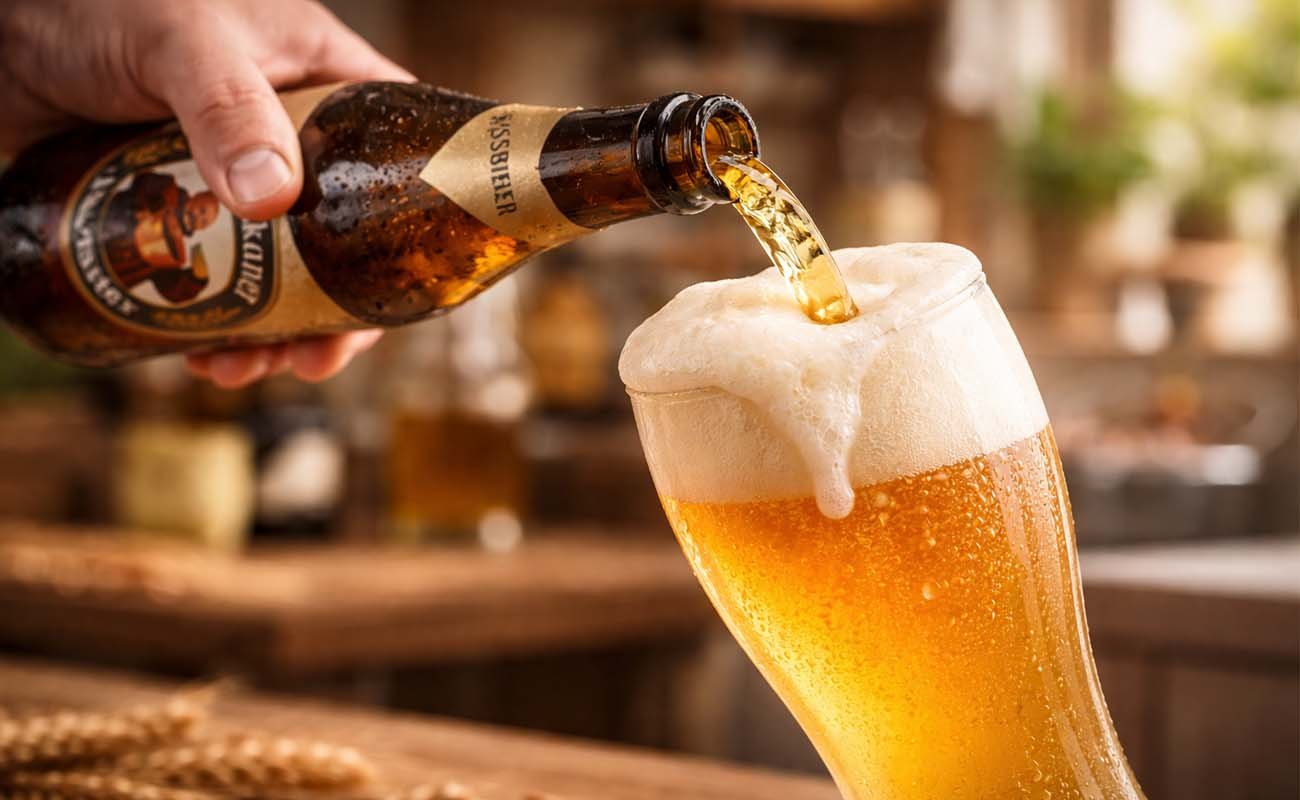
The pour matters more than most people realise. It controls how much carbonation escapes, how the yeast distributes through the liquid, and how the foam crown forms. A properly poured Franziskaner is noticeably better than a carelessly poured one.
Start with a clean, dry Weizen glass — the tall, slender, slightly curved style made specifically for wheat beer. Tilt the glass at 45 degrees and pour slowly, letting the beer run down the inside wall. Stop when the glass is about three-quarters full. Set both the glass and bottle down and wait 30 seconds.
Now the step most people skip: leave the final inch of beer in the bottle, pick it up, and gently swirl it in a slow circular motion. This rouses the yeast sediment that has settled at the bottom — and that sediment carries a large portion of the beer’s flavour and aroma. Pour that remaining cloudy liquid straight down into the centre of the glass. It creates the foam crown and distributes the yeast evenly throughout the beer.
Wait 60 to 90 seconds before drinking. The foam settles slightly and the beer reaches its ideal presentation. This entire process takes about two minutes and genuinely transforms the experience.
Food Pairings That Actually Work
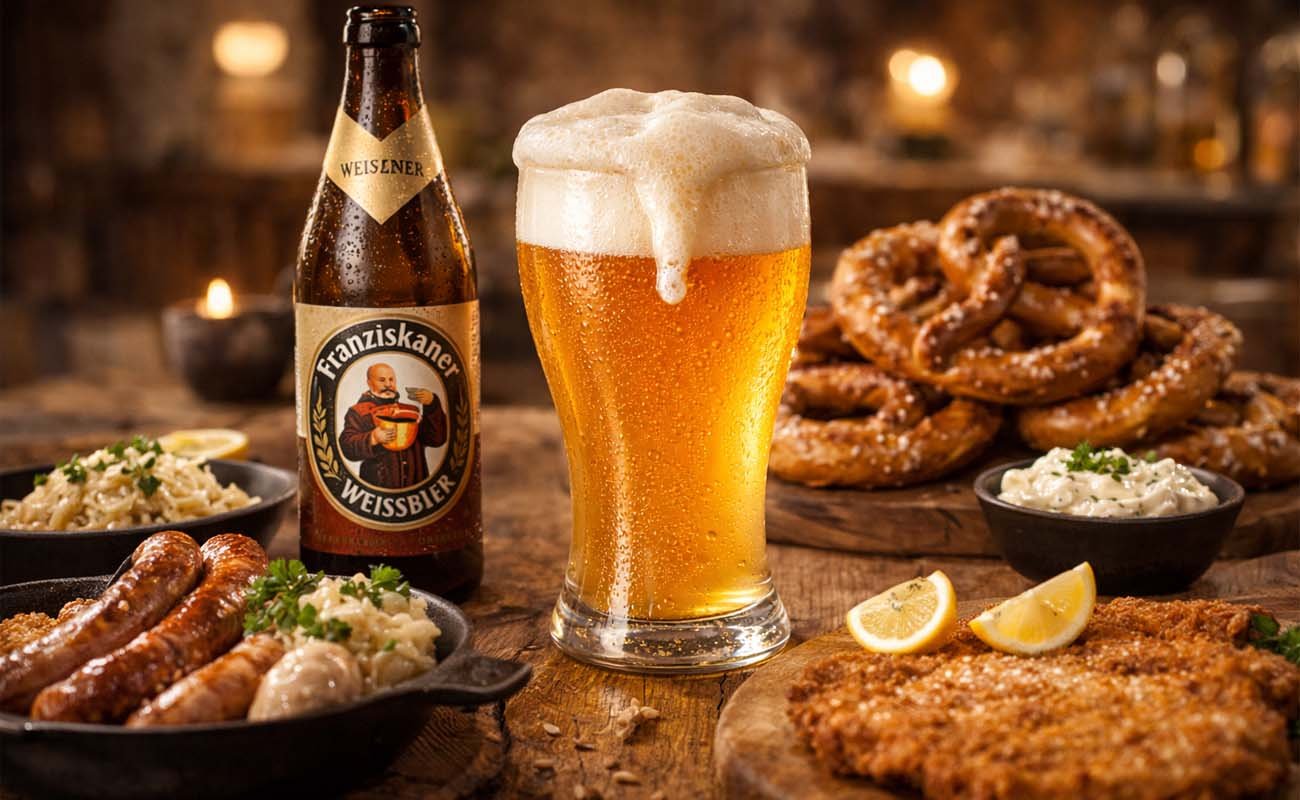
Most guides list “bratwurst and pretzels” and stop there. That pairing is correct but only scratches the surface. Franziskaner is one of the most food-versatile beers in the world because of how its specific elements interact with different ingredients. Here are the pairings that genuinely work — and why:
- Traditional Bavarian food — Weißwurst, soft pretzels, and pork schnitzel. This is the cuisine the beer grew up alongside and the natural harmony is unbeatable.
- Grilled meats — The carbonation cuts through char and fat beautifully, refreshing the palate between every bite. Works brilliantly at any barbecue, not just a German beer garden.
- Spicy Asian cuisine — Thai curries, Vietnamese dishes, and mild Indian food. Where a hoppy IPA amplifies heat, Franziskaner’s fruit sweetness and carbonation actively cool it down. Most people are genuinely surprised by how well this works.
- Seafood — Grilled white fish, prawns, and crab. The beer’s clean finish refreshes the palate without competing with the delicate flavours of the fish.
- Soft cheeses — Brie, goat’s cheese, and mild Edam echo the beer’s creamy texture in a way that creates natural harmony rather than contrast.
- Banana-forward desserts — Fruit tarts, bread and butter pudding, and banana-based sweets. The flavour connection between the beer’s yeast character and these desserts is direct and genuinely delicious.
Every Franziskaner Variant Explained
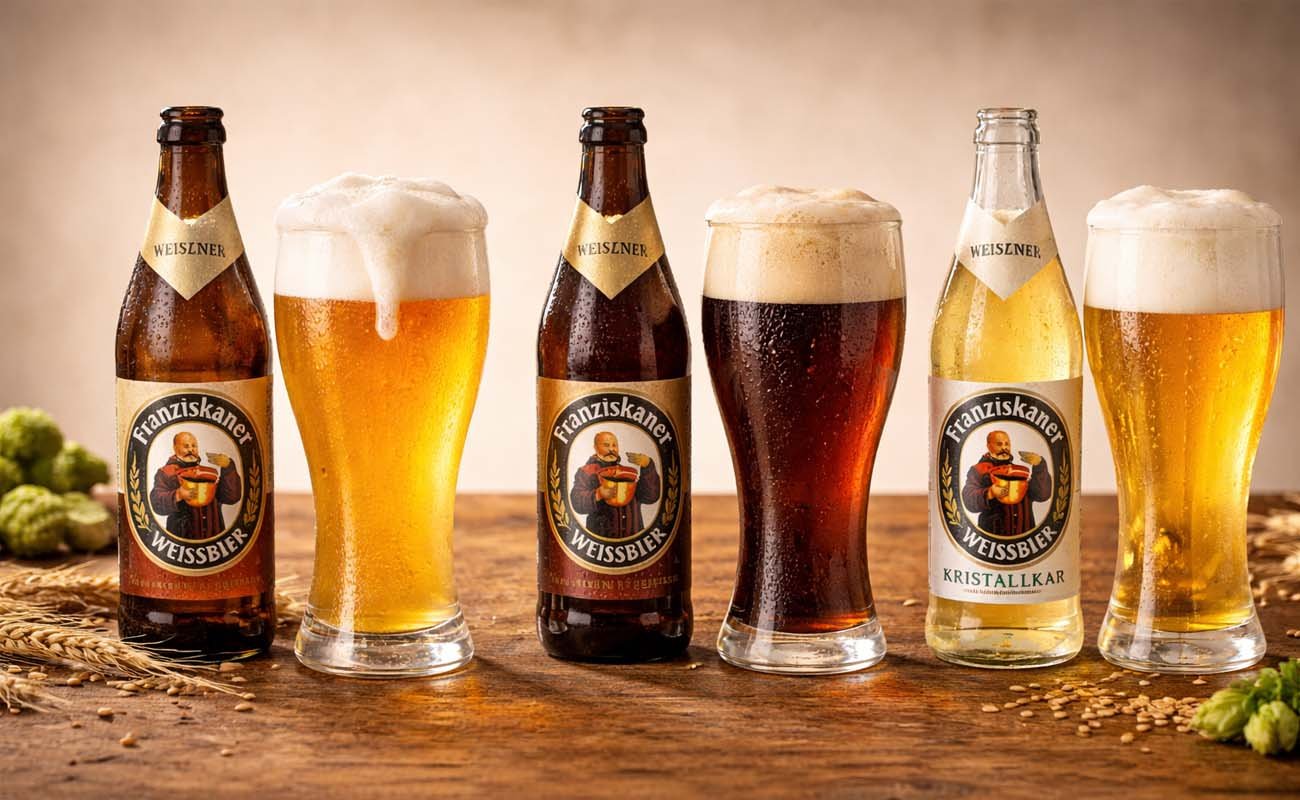
Hefe-Weissbier Naturtrüb is the flagship — unfiltered, naturally cloudy, 5% ABV. This is the beer the entire brand is built around and the benchmark for the German Hefeweizen category globally.
Hefe-Weissbier Dunkel is the dark wheat beer variant. It uses roasted malts to introduce caramel, light chocolate, and toasted bread notes without losing the signature wheat yeast character. Richer and more satisfying during the cooler months.
Weissbier Kristallklar uses the same base recipe but is filtered to remove the yeast, producing crystal clarity and a crisper, lighter mouthfeel. A genuinely different experience — cleaner but noticeably less complex and aromatic than the original.
Hefe-Weissbier Leicht is the lower-alcohol, lower-calorie option designed for longer drinking sessions without sacrificing the core flavour identity.
Weissbier Royal is the stronger expression, launched in 2011 at 6% ABV. Slightly darker than the original, more carbonated, more robust in character, and better suited for slow, deliberate sipping than casual drinking.
Alkoholfrei is the non-alcoholic version, which captures the fruity and spicy wheat beer aroma more faithfully than most alcohol-free beers ever manage.
Franziskaner vs. The Three Biggest Rivals
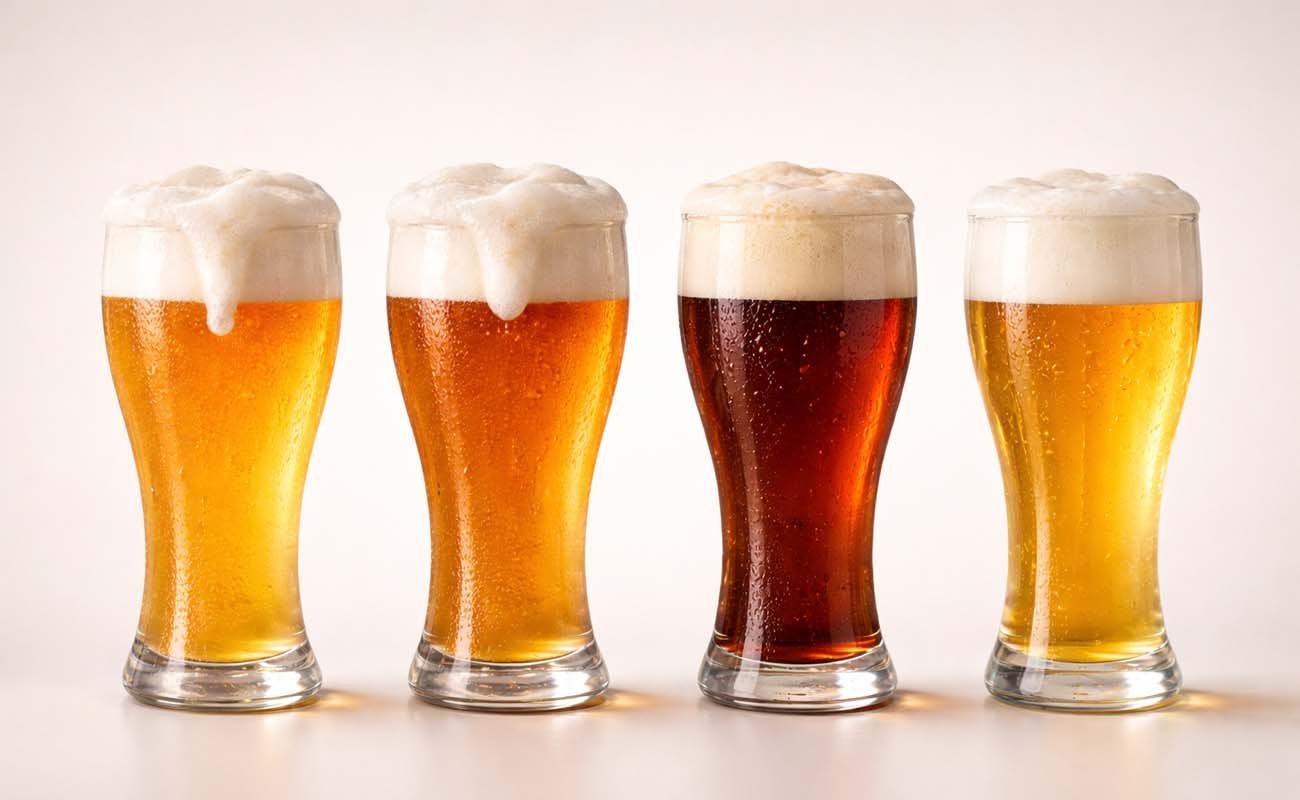
Versus Paulaner Hefe-Weißbier: Paulaner is the closest rival and the fairest comparison. Both use similar top-fermenting wheat yeast and both achieve clean, precise fermentation. The real difference is where each beer sits on the banana-to-clove spectrum. Paulaner leans towards clove — spicier, drier on the finish, slightly more austere overall. Franziskaner leads with fruit and finishes sweeter. Neither approach is wrong. Franziskaner is simply more immediately approachable for most drinkers.
Versus Erdinger Weißbier: Erdinger is the world’s highest-volume German wheat beer brand, which makes it the most widely available. In direct side-by-side comparisons, however, it consistently produces a noticeably thinner mouthfeel than Franziskaner. The carbonation in Erdinger is sharper and less integrated, and the banana-clove balance tends to be less precise — clove sometimes dominates in a way that feels slightly harsh. Volume and quality are not the same thing, and this comparison illustrates that clearly.
Versus Weihenstephaner Hefeweissbier: Weihenstephaner is the choice of brewing professionals and competition judges. It is technically the most precise Hefeweizen produced anywhere in the world and brews from one of the oldest continuously operating brewery sites in existence. All of that is true and impressive. But technical precision is not the same as warmth and personality. Weihenstephaner impresses whoever drinks it. Franziskaner makes whoever drinks it want another glass immediately. Both are worth trying — they are genuinely different experiences with different strengths.
The Questions People Search for Most
Does Franziskaner actually contain banana?
No. The banana aroma and flavour are produced entirely during fermentation by the yeast reacting with wheat malt. The specific compound responsible is called isoamyl acetate. No fruit is added at any stage of brewing.
Why is it cloudy?
The cloudiness is suspended yeast and wheat proteins deliberately left in the beer. Removing them, as the Kristallklar variant does, produces a clear but less complex and less aromatic result. The cloudiness is where much of the character lives.
Is it a lager or an ale?
By production method it is technically an ale, using top-fermenting yeast at warmer temperatures. But it shares none of the hop-forward bitterness of English or American ales. It occupies its own distinct category.
What glass should I use?
Always a Weizen glass — the tall, slender, curved style made for wheat beer. It holds the foam, focuses the aroma, and presents the colour correctly. A pint glass works practically but delivers a noticeably inferior experience.
Is it gluten-free?
No. It is brewed with both wheat malt and barley malt, both of which contain gluten. It is not suitable for anyone with coeliac disease or significant gluten sensitivity.
What temperature should I serve it?
Between 9 and 12 degrees Celsius. Colder than this and the flavour complexity is muted. Warmer and the carbonation becomes less pleasant. The middle of that range is where this beer performs best.
Does Franziskaner have its own Oktoberfest tent?
No — and this surprises many fans. Franziskaner does not have an independent tent at Munich’s Oktoberfest. Its presence at the festival is tied to Spaten, its long-standing brewing partner, as a legacy of their 1922 merger.
Why This Beer Has Lasted 660 Years
The honest answer requires no embellishment: the beer is genuinely excellent, and the people brewing it have never compromised on that fact.
Franziskaner has survived two world wars, multiple corporate mergers, the global dominance of industrial lager, the craft beer revolution, and every trend that threatened to make traditional styles irrelevant. It survived all of that not because of marketing or distribution alone, but because the beer itself rewards every person who pays proper attention to it.
The monk on the label never actually brewed a single batch. But the people who have been brewing this beer since 1363 understood something important: flavour built on real ingredients, honest process, and a refusal to cut corners outlasts every trend without exception. This beer is the proof of that idea, delivered fresh in every glass.
Find a bottle, use the right glass, follow the pour steps, and let it reach the right temperature. Everything else takes care of itself.
Find the Best: How to Make Lederhosen
